Introduction: The Complexity of Functional Intimate Manufacturing
For international sourcing directors, private label owners, and apparel procurement executives, evaluating a production partner goes beyond examining monthly output sheets. In the specialized domain of functional protective wear, the manufacturing process dictates the ultimate field performance of the product. Unlike traditional lingerie, an engineering-grade leakproof brief involves the synchronization of advanced material science, multi-layer composite alignment, and flawless seam construction.
At Lynmiss Factory, we maintain total quality transparency by operating a vertically integrated manufacturing ecosystem. This technical brief provides an operational breakdown of how we transform raw yarns into high-performance, market-ready protective intimates inside our advanced production facility.
Step 1: In-House Yarn Selection and Circular Knitting
The manufacturing journey begins at the molecular level with rigorous textile sourcing. To ensure an optimal balance of moisture management and skin comfort, our facility utilizes premium raw fibers including certified bamboo viscose, high-gauge organic cotton, and specialized hydrophobic micro-polyester filaments.
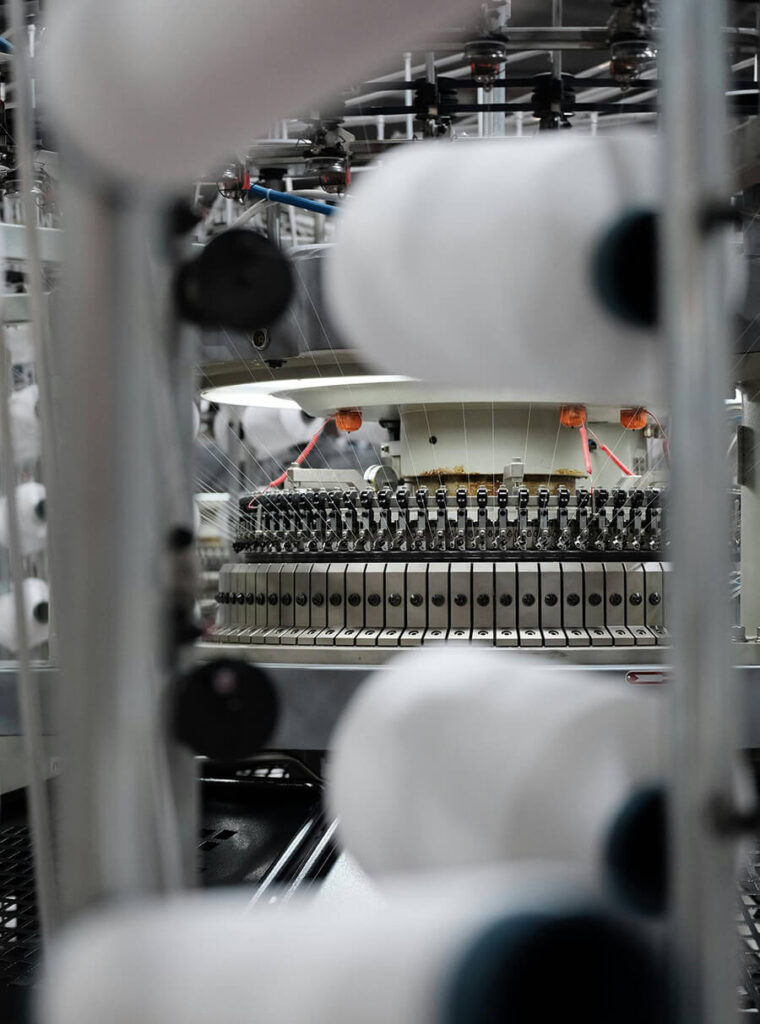
- Circular Knitting & Density Control: Operating a robust fleet of over 60+ advanced circular knitting machines , we knit our functional textiles in-house to control fabric loop density and cross-linked tension from the very beginning.
- GSM Weight Optimization: We carefully calibrate the fabric weight (GSM) during the knitting phase to ensure that our moisture-wicking stay-dry topsheets and high-capacity absorbent cores hit exact structural density specifications with a strict tolerance limit of ±5%.
Step 2: 15-Day Precision Prototyping and Technical Validation
Before bulk rolls move to the cutting floor, a definitive blueprint must be validated through our specialized sample development division.
- The 15-Day Sampling Timeline: Upon receiving a brand’s technical design packages (Tech Packs), our engineering team executes an intensive 15-day physical counter-sampling program.
- Physical Fit & Fluid Verification: Over this 15-day window, our team crafts exact physical prototypes utilizing real-world functional lining options. These samples are subjected to immediate fit testing and technical fluid drop tests to verify real-world absorption capacities and elastomeric recovery profiles before mass tooling begins.
Step 3: Multi-Layer Material Alignment and Automated Precision Cutting
Once bulk fabric rolls have completed dyeing and quality inspection, they are routed to our automated cutting facility. Functional briefs feature a complex, multi-ply gusset structure—typically combining up to four or five layers of diverse materials. Traditional manual hand-cutting introduces alignment errors that lead directly to perimeter edge leaks.
- CNC Automated Cutting: At Lynmiss Factory, we utilize heavy-duty CNC automated fabric laser cutters to process our lay-ups. This mechanical process guarantees surgical 0.1mm cutting consistency across all pattern blocks and sizes, from petite lines to complex plus-size geometries.
- Anti-Shift Calibration: Precise cutting ensures that during the subsequent sewing phase, the high-density needle-punched microfiber cores and waterproof membranes do not warp or shift along the critical leg opening bounds.
Step 4: Specialized Thermal Lamination (SALT Craftsmanship)
The true differentiator of a specialized functional garment factory is how the barrier layers are joined. Low-end suppliers often rely on cheap, topical chemical sprays to achieve water repellency, which wash away and present severe chemical risks.
- The Lamination Process: We handle layer integration via our proprietary Super Absorption Lamination Technology (SALT) .
- PFAS-Free Physical Bonding: Using advanced, high-precision OSHIMA thermal lamination machinery, we physically fuse the high-oxygen-permeable TPU membrane to the surrounding absorbent layers under highly regulated temperature and pressure constraints. This structural layer bond contains zero hazardous fluorine chemistry, aligning with strict environmental laws, as detailed in our comprehensive
Step 5: Advanced Assembly, Seamless Technology, and In-line Sewing
After components are laminated, the pattern panels enter our sewing assembly lines. The production floor incorporates two distinct assembly tracks depending on product requirements:
- Seamless Knitting Technology: For high-end activewear, teenager lines, or shapewear styles demanding a second-skin feel, we deploy our advanced seamless knitting workshops. These systems form continuous elastomeric compression garments directly from the yarn stage, dramatically minimizing raw seams and maximizing wearing comfort.
- Precision Mechanical Stitching: For traditional cut-and-sew variants, operators utilize specialized multi-needle flatlock machines. These systems are calibrated to apply consistent tension to prevent functional layers from binding, maintaining the flat profile of the gusset.
Step 6: 100% Metal Contamination Screening and Packing Logistics
The final step of our manufacturing pipeline is designed around total corporate risk mitigation and retail-ready compliance.
- Conveyor Needle Detection: Every single finished brief must pass through our automated high-sensitivity conveyor needle detector networks before entering bags or cartons. Our automated industrial machinery is calibrated to detect microscopic ferrous particles down to an exact $1.0\text{mm}$ standard, eliminating liability issues prior to customs clearance.
- Zero-Metal Packing Zone: Once approved by mechanical scanning, products flow into our isolated, metal-free cleanrooms where loose blades or scissors are forbidden. Garments are folded, labeled with verified barcodes, and securely boxed to meet international major retail audit parameters.
Conclusion: Aligning with a Verified Functional Partner
Manufacturing a technical garment line demands more than analyzing standard machine speeds ; it requires a comprehensive, data-backed approach to product security and chemical合规. By managing the production journey from the raw yarn stage to final retail packaging, Lynmiss Factory serves as a reliable OEM/ODM contract manufacturing platform for enterprise buyers globally.
To review our physical facilities, request standard fabric weight sheets, or submit your specifications for our technical review, select an operational pathway below to connect with our engineering division:
- Need to verify material safety and chemical certifications? Download Our OEKO-TEX & GRS Certifications
- Want to examine our full customization capabilities? View Our Custom OEM/ODM Services
- Ready to coordinate an audit or request a 15-day physical sample? Get a Fast Wholesale Quote & Sample Batch