Direct Answer: Is Organic Cotton Good for Period Underwear?
Yes. Organic cotton is a strong fabric choice for period underwear brands that want a soft, breathable, skin-friendly, and more natural product story. However, organic cotton alone does not make period underwear leakproof. Leakproof performance depends on the full product structure, including the absorbent core, waterproof layer, gusset coverage, side leakproof design, and wash-tested construction.
For private label brands, the best approach is to develop organic cotton period underwear with a factory that understands both fabric sourcing and leakproof garment engineering.
Why Organic Cotton Period Underwear Is a Strong Product Direction
Organic cotton period underwear is becoming more attractive for brands that want to meet consumer demand for comfort, safer skin contact, and sustainable material choices. Since period underwear is worn close to the body for long hours, buyers are paying more attention to what touches the skin.
For brands, organic cotton can support a premium and natural product story. It is especially suitable for teen period underwear, sensitive-skin collections, daily-use period underwear, and sustainable private label product lines.
However, organic cotton should not be treated as the entire product solution. In OEM manufacturing, product performance depends on how the fabric works together with absorbent layers, waterproof materials, gusset design, fit, sewing quality, and repeated washing durability.
That is why brands should evaluate organic cotton period underwear as a complete functional garment, not only as a fabric option. If your brand is developing a new collection, working with a custom period underwear manufacturer can help you test fabric, absorbency, fit, and production feasibility before bulk orders.
Organic Cotton vs Regular Cotton: What Should Brands Know?
Organic cotton and regular cotton can both be used in period underwear, but they serve different product positions.
Regular cotton is familiar, breathable, and cost-effective. It is often suitable for brands that want a classic underwear feel and a more accessible price point.
Organic cotton is more suitable for brands that want a stronger natural, sensitive-skin, sustainable, or premium positioning. When supported by proper material documentation, it can help brands create a more trustworthy product story.
For B2B buyers, the decision should not only be based on fabric feel. Brands should also check:
- Exact fabric composition
- Whether organic cotton is used in the body fabric, lining, or both
- Organic material documentation
- Shrinkage after washing
- Color fastness
- Compatibility with absorbent layers
- Compatibility with waterproof layers
- MOQ and bulk production stability
- Certification support for target markets
Organic Cotton Does Not Equal Leakproof
A common mistake is assuming that organic cotton automatically creates a better leakproof product. It does not.
Organic cotton is usually used as the body fabric, lining, or skin-contact layer. It can improve comfort and product positioning, but the real leakproof function comes from the absorbent core, waterproof layer, and gusset structure.
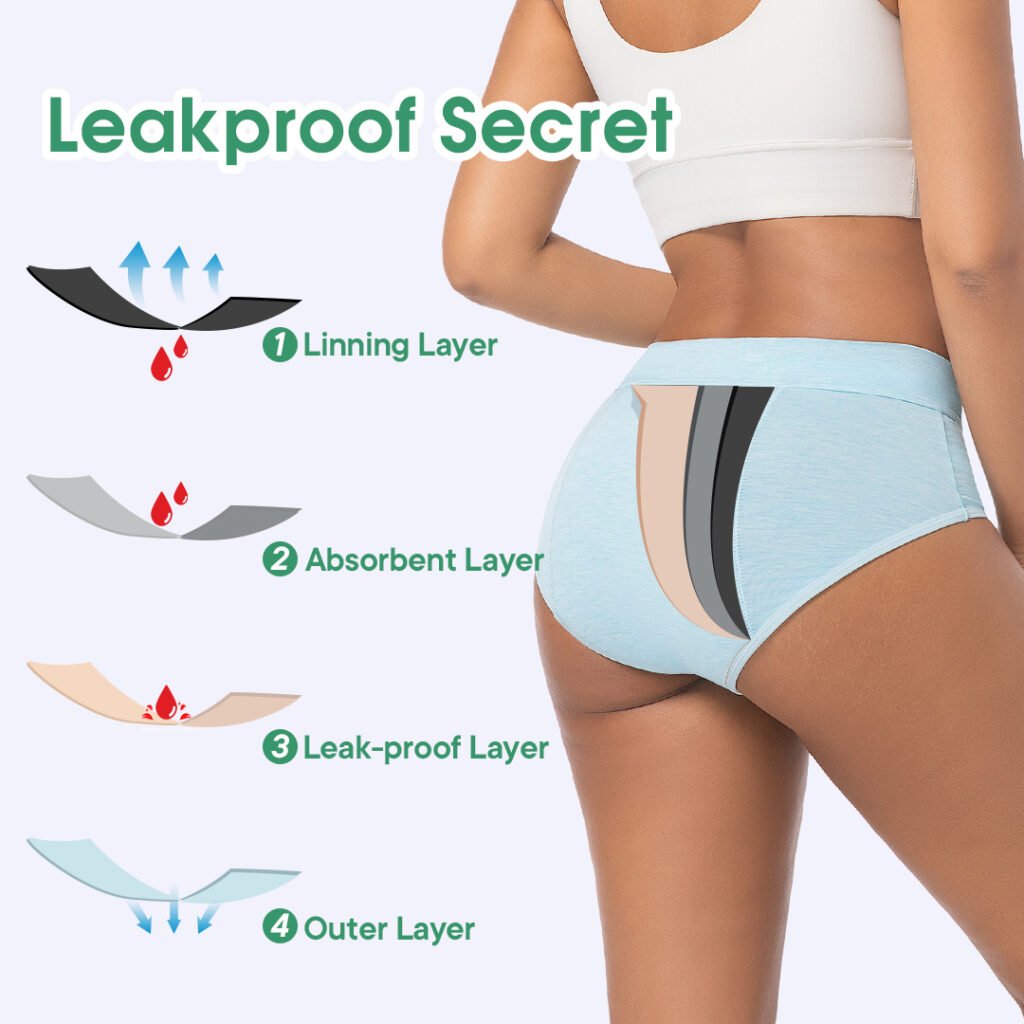
A reliable period underwear structure usually includes:
- A soft skin-contact layer
- An absorbent core
- A waterproof or leak-resistant layer
- A stable outer fabric
- Proper gusset coverage
- Side leakproof or extended protection design when needed
This is why brands should confirm period underwear absorbency levels before approving samples. A light-flow organic cotton bikini and an overnight organic cotton brief should not use the same construction.
Best Product Types for Organic Cotton Period Underwear
1. Teen Period Underwear
Organic cotton is a good direction for teen period underwear because it feels soft, natural, and easy to understand. For first-period products, comfort and trust are especially important.
Brands targeting teen customers can combine organic cotton with simple silhouettes, moderate absorbency, comfortable waistbands, and clear care instructions.
2. Sensitive-Skin Period Underwear
Organic cotton can support a gentle and skin-friendly product story. However, brands should still check dyeing, finishing, waterproof layers, and testing documents. Fabric choice is only one part of the full product safety profile.
3. Daily-Use Period Underwear
Organic cotton works well for daily protection, light-to-moderate flow, spotting, and backup use. These products should feel close to regular underwear while offering discreet leak protection.
4. Heavy-Flow and Overnight Period Underwear
Organic cotton can also be used in heavy-flow or overnight styles, but the absorbent core must be engineered for higher protection. Brands should test absorbency volume, surface dryness, side leakage, comfort, and wash durability before bulk production.
Organic Cotton Period Underwear OEM Checklist
Before bulk production, private label brands should confirm:
- Exact fabric composition
- Where organic cotton is used in the product
- Organic cotton certification or material documentation
- OEKO-TEX or other skin-contact textile testing
- PFAS-free waterproof layer options
- Absorbency level for each style
- Gusset length and coverage
- Wash durability and shrinkage
- Color fastness
- MOQ, sample lead time, production lead time, and packaging options
This checklist helps brands avoid approving a fabric swatch without testing the full period underwear construction.
Certifications and Compliance: What Should Brands Ask For?
For organic cotton period underwear, certification is important because it helps brands reduce sourcing risk and support product claims.
Brands should ask suppliers about:
- Organic cotton material documentation
- OEKO-TEX Standard 100 support
- GOTS or OCS-related material options when applicable
- PFAS-free material confirmation for leakproof layers
- BSCI or SEDEX factory audit support when required
- Wash testing
- Needle detection
- Raw material inspection
- Finished goods inspection
For skin-contact products, OEKO-TEX certified period underwear can help support safety positioning. For leakproof menstrual products, PFAS-free period underwear is also becoming more important because brands and consumers are paying closer attention to waterproof textile materials.
How Absorbency Should Be Designed
Absorbency should be defined before sample development. A good OEM supplier should ask whether the product is for:
- Light flow
- Moderate flow
- Heavy flow
- Overnight protection
- Teen use
- Postpartum backup
- Light bladder leakage
Each use case requires a different gusset structure. A light-flow bikini may need a thin and discreet absorbent area, while an overnight brief may need extended front-to-back protection and stronger liquid retention.
For brands, this means the product development process should not start with “Which fabric looks best?” It should start with “What protection level does the customer need?”
Common Mistakes Brands Should Avoid
Mistake 1: Using “Organic Cotton” as the Only Selling Point
Organic cotton is valuable, but it does not explain leakproof performance. Product pages and packaging should also explain absorbency, waterproof layers, wash durability, and fit.
Mistake 2: Not Checking the Waterproof Layer
Many buyers now ask whether leakproof underwear is PFAS-free. Brands should confirm waterproof material options and testing support before mass production.
Mistake 3: Ignoring Shrinkage
Cotton fabrics may shrink if not properly tested and controlled. Brands should request wash test results before confirming bulk production.
Mistake 4: Using One Structure for Every Absorbency Level
A thong, bikini, high-waist brief, boyshort, and overnight style should not all use the same absorbency construction. Each style needs a different balance of comfort, protection, and bulk control.
Mistake 5: Making Claims Without Documents
If a brand wants to claim organic, PFAS-free, OEKO-TEX certified, non-toxic, or sustainable, it should keep supporting documents from the supplier.
Why Work With a Specialized Period Underwear Manufacturer?
Period underwear is more technical than regular underwear. A factory must understand fabric sourcing, pattern engineering, gusset construction, waterproof materials, absorbency testing, sewing quality, and final inspection.
Lynmiss Factory supports OEM and ODM development for period underwear, period swimwear, incontinence underwear, seamless bras, and shapewear. For organic cotton period underwear, the factory can help brands evaluate fabric options, develop samples, customize absorbency levels, and prepare private label production.
Available customization directions can include fabric, color, size range, waistband, logo, care label, packaging, absorbency level, gusset coverage, and leakproof construction.
Final Recommendation for Private Label Brands
Organic cotton period underwear is a strong choice if your brand wants to build a soft, breathable, skin-friendly, and sustainable product line. It is especially suitable for teen products, sensitive-skin collections, daily-use period underwear, and premium private label positioning.
But successful OEM production requires more than selecting organic cotton. Brands should evaluate the full product system:
- Organic cotton fabric
- Absorbent core
- Waterproof layer
- PFAS-free material options
- Gusset coverage
- Washing durability
- Certification support
- Fit and size grading
- MOQ and production lead time
If you are planning to develop private label period underwear with organic cotton, Lynmiss Factory can help compare material options, build samples, test absorbency, and prepare production for your target market.
FAQ
Is organic cotton good for period underwear?
Yes. Organic cotton is a good choice for brands that want soft, breathable, and skin-friendly period underwear. However, leakproof performance depends on the absorbent core, waterproof layer, and gusset design.
Is organic cotton period underwear fully leakproof?
Organic cotton itself is not waterproof. A leakproof period underwear product needs absorbent layers and a waterproof or leak-resistant barrier.
What certifications should brands ask for?
Brands can ask for OEKO-TEX Standard 100 support, organic cotton documentation, PFAS-free material confirmation, and factory audits such as BSCI or SEDEX when required.
Can organic cotton be used for heavy-flow period underwear?
Yes, but heavy-flow styles need a stronger absorbent core, wider gusset coverage, and reliable leakproof testing before bulk production.
What is the MOQ for custom organic cotton period underwear?
For Lynmiss Factory, custom OEM orders are normally around 1000 pieces, depending on style, fabric, color, and customization requirements.
Can Lynmiss Factory customize fabric, logo, color, label, and packaging?
Yes. Lynmiss Factory supports OEM and ODM customization, including fabric, color, size, logo, label, care label, packaging, and absorbency structure.