For period care brands, choosing between reusable period pads and period underwear is not always an either-or decision.
Some buyers are looking to develop both products within the same collection, allowing customers to choose different protection options for different situations.
But sourcing two product categories also introduces new questions:
Can they share materials? Should they use the same absorbency standards? Can packaging be developed together? And is working with one manufacturer more efficient than managing separate suppliers?
The short answer: sourcing both from one manufacturer can simplify product development and supplier coordination, provided the manufacturer has the capabilities and quality controls required for each category.
Here is what private label brands should consider before developing a combined reusable period care collection.
1. Reusable Period Pads vs Period Underwear: What Is the Difference?
Both products are designed to provide reusable menstrual protection, but their construction and wearing experience are different.
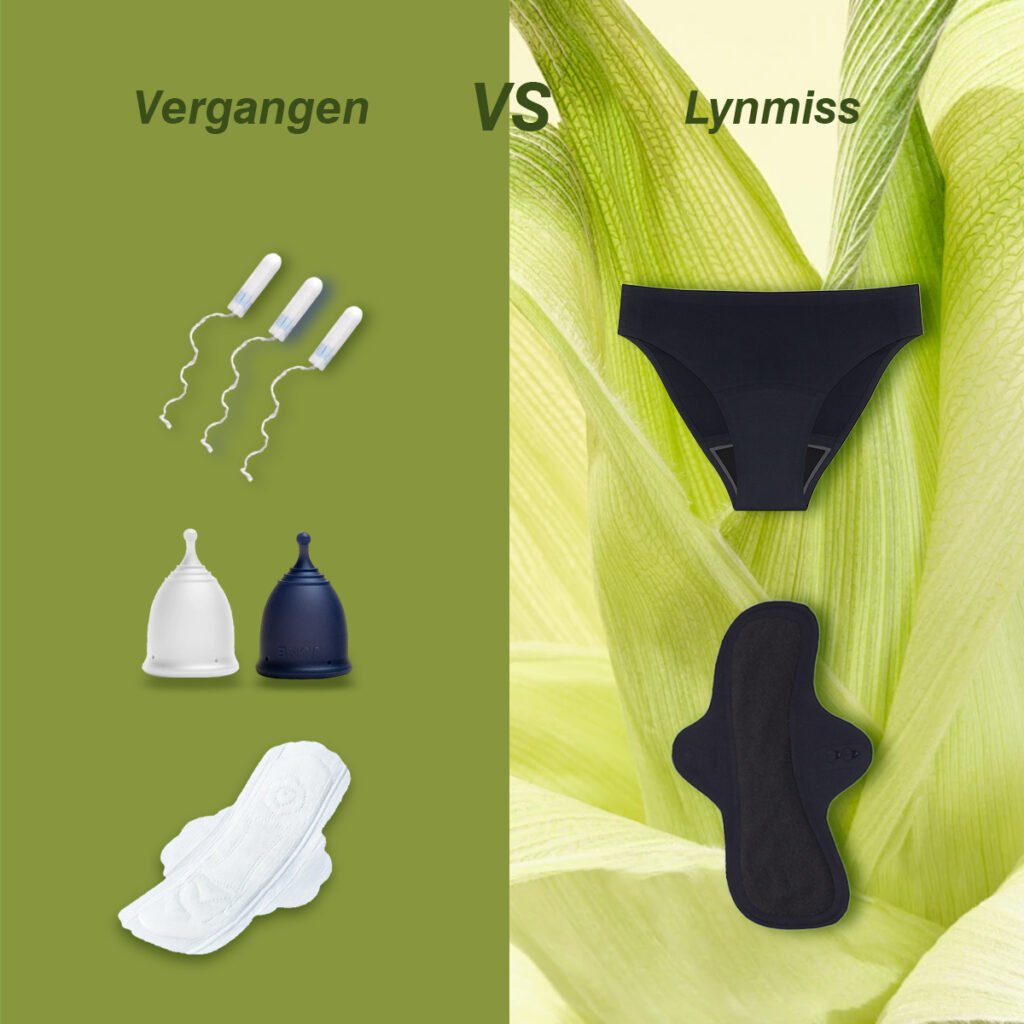
Period underwear integrates the absorbent structure directly into the garment, while reusable period pads are separate products that can be attached to compatible underwear.
For brands, these differences affect product positioning, design, sizing, and manufacturing.
| Feature | Reusable Period Pads | Period Underwear |
|---|---|---|
| Product structure | Separate absorbent pad with wings or fasteners | Underwear with integrated absorbent gusset |
| Size options | Different pad lengths and shapes | Garment sizes and silhouettes |
| Customization | Pad contour, absorbency, fabrics, snaps, prints | Fit, gusset coverage, fabrics, absorbency, colors |
| Main fit consideration | Pad positioning and stability | Garment fit and gusset positioning |
| Packaging options | Multi-piece pad sets | Individual garments or multi-packs |
| Development focus | Absorption, fastening, comfort, wash durability | Absorption, leakage control, fit, wash durability |
Neither product is automatically better.
The right choice depends on the target customer, wearing preferences, product positioning, and brand strategy.
For manufacturers, the important point is that similar absorbent materials do not make the two products technically interchangeable.
2. Why Brands Should Consider a Combined Period Care Collection
Offering both reusable pads and period underwear allows brands to build a more flexible product range.
Instead of relying on one product format, a brand can create different options for customers with different needs.
Broader Product Selection
Some customers prefer the integrated design of period underwear. Others may prefer a removable reusable pad.
Offering both allows brands to address these preferences without positioning one product as a replacement for the other.
More Collection Opportunities
A brand can develop coordinated products using consistent colors, fabrics, prints, and packaging.
For example, a collection could include:
- Light-flow period underwear
- Moderate-flow period underwear
- Heavy-flow reusable pads
- Overnight reusable pads
- Coordinated multi-piece sets
Each product should have a clearly defined protection level and intended use.
More Flexible Retail Bundles
Reusable period care products can be offered individually or as curated sets.
A brand might create a starter collection containing period underwear and several reusable pads, allowing customers to explore different product formats.
However, the products should not be assumed to provide combined absorbency when worn together unless that use has been specifically designed and tested.
For B2B buyers, the opportunity is to build a coherent product portfolio rather than simply add more SKUs.
3. Can Reusable Pads and Period Underwear Share the Same Materials?
This is one of the most important questions to discuss with a manufacturer.
Both products may use similar material categories, including:
- Skin-contact fabrics
- Moisture-wicking layers
- Absorbent-core materials
- Leak-resistant membranes
- Outer fabrics
However, the final construction requirements can be different.
Reusable Period Pads
Pad development may involve a soft top sheet, absorbent core, leak-resistant backing, and wing or snap closure.
Manufacturers need to consider pad thickness, flexibility, fastening stability, and compatibility with underwear.
Period Underwear
Period underwear integrates the absorbent structure into the gusset.
The garment must balance absorbency with body fit, leg-opening tension, stretch, and comfort during movement.
A material suitable for one product may require a different thickness, layer configuration, or construction method in the other.
Brands should therefore ask their manufacturer to evaluate materials based on the finished product’s intended performance.
Explore custom reusable period pads manufacturing to see how pad size, absorbent layers, fabrics, and closures can be developed for different product programs.
4. Absorbency Testing Should Be Product-Specific
When developing a combined collection, brands should avoid using one absorbency claim across different product formats without appropriate supporting evidence.
A reusable pad and a period panty may use similar absorbent materials but perform differently because of their shape, construction, and positioning.
Before bulk production, brands should review the following performance factors.
Absorption Capacity
How much liquid can the finished product absorb under the selected test conditions?
Absorption Speed
How quickly does the absorbent structure take in liquid?
Rewet Performance
How much liquid returns to the surface after absorption and pressure?
Leakage Resistance
Does liquid escape through the backing, edges, or other vulnerable areas?
Wash Durability
Does repeated washing affect absorbency, shape, closures, or protective materials?
For period underwear, additional fit and movement evaluations are important.
For reusable pads, wing design, snap placement, and stability inside compatible underwear should also be assessed.
Testing requirements should be defined for each product, and results should support the exact claims used in product descriptions and packaging.
5. How to Plan a Private Label Period Care Collection
Brands do not necessarily need to launch a large collection immediately.
A smaller, coordinated product range can be easier to develop, test, and manage.
Here is an illustrative starting structure:
| Product | Suggested Positioning | Customization Priority |
|---|---|---|
| Moderate-flow period underwear | Everyday menstrual protection | Fit, gusset coverage, comfort |
| Heavy-flow period underwear | Higher absorbency needs | Core structure, rear coverage, leakage control |
| Regular reusable pad | General reusable pad option | Pad contour, thickness, snap position |
| Overnight reusable pad | Extended coverage design | Length, rear width, absorbency |
| Period care starter set | Coordinated product bundle | Packaging, product selection, instructions |
These are proposed collection concepts, not standardized performance specifications.
Each style should be developed according to the intended user and validated through appropriate testing.
Brands can explore different silhouettes and absorbency programs through our OEM/ODM period underwear manufacturing solutions.
6. Is Sourcing Both Products from One Manufacturer Better?
Working with one manufacturing partner can offer advantages, but only if that supplier can manage both categories effectively.
Potential Advantages
Coordinated Product Development
One development team can help align material selection, colors, functional specifications, and packaging requirements.
Simplified Communication
Buyers may spend less time coordinating specifications, sample revisions, and production updates across multiple suppliers.
Consistent Brand Presentation
A coordinated approach can make it easier to develop matching labels, packaging artwork, and collection themes.
More Efficient Order Planning
When production schedules allow, a single manufacturing partner may help coordinate shipments and order documentation.
What Brands Still Need to Verify
Using one supplier does not automatically mean lower costs or better quality.
Before selecting a manufacturer, buyers should confirm:
- Whether both product categories are manufactured in-house or involve external suppliers
- Whether separate product samples and tests are available
- How material specifications are controlled
- Whether each category has its own MOQ
- Whether production and shipping schedules can be coordinated
The goal is not simply to reduce the number of suppliers. It is to improve development consistency without sacrificing product quality.
7. MOQ, Packaging, and Cost: What Should Buyers Compare?
Combined sourcing projects require careful commercial planning.
A reusable pad order may be quoted in sets, while period underwear may be quoted by garment, style, color, or size assortment.
This means brands should not assume that a combined order automatically qualifies for one shared MOQ.
Before requesting a quotation, clarify:
MOQ by Product Category
Confirm the minimum quantity for reusable pads and period underwear separately.
Material Requirements
Custom fabrics, colors, prints, or absorbent materials may affect minimum quantities and cost.
Packaging Configuration
Individual packaging, multi-piece pad sets, and mixed product bundles may require different packing processes.
Sampling Costs
Each product structure may require its own prototypes, revisions, and testing.
Order Lead Time
Ask whether the products can be manufactured and packed according to one coordinated delivery schedule.
A clear cost comparison should include development, materials, testing, packaging, and logistics—not just the unit price.
8. What Should Brands Prepare Before Requesting Samples?
A combined sourcing project becomes easier when the buyer provides a structured development brief.
We recommend including:
- Target market: Countries or regions where the collection will be sold.
- Product selection: Required pad styles, underwear silhouettes, and bundle combinations.
- Absorbency targets: Intended flow levels and required performance evidence.
- Materials: Preferred fabrics, leak-resistant layers, and chemical compliance requirements.
- Sizes and dimensions: Underwear size charts and reusable pad measurements.
- Branding: Colors, patterns, labels, logos, and packaging artwork.
- Estimated quantities: Expected order volume by product category.
- Testing requirements: Absorbency, wash durability, material safety, and other market-specific checks.
Brands should also identify which elements are essential and which can be adjusted during development.
This gives the manufacturer more flexibility to recommend suitable construction methods and cost options.
9. How Lynmiss Factory Supports Combined Period Care Development
At Lynmiss Factory, we support OEM/ODM development for both period underwear and reusable period pads.
For period underwear, customization options include silhouettes, fabrics, gusset coverage, absorbent-core construction, size grading, colors, and branding.
For reusable period pads, brands can develop different pad sizes, contours, absorbent structures, wing designs, snap closures, prints, and multi-piece sets.
Our development services also cover material sourcing, sampling, product adjustments, and private label packaging.
For brands planning a coordinated period care collection, the first step is to define the product range and performance requirements for each category.
From there, suitable materials, sample specifications, and production arrangements can be discussed.
Learn more about our OEM/ODM customization services.
FAQ
Can I order reusable period pads and period underwear from the same manufacturer?
Yes. Some OEM/ODM manufacturers, including Lynmiss Factory, support both product categories. Buyers should confirm manufacturing capabilities, product-specific testing, MOQs, and production arrangements before placing an order.
Can both products use the same absorbent materials?
They may share certain material categories, but their construction and performance requirements are different. Material suitability should be evaluated for each finished product.
Can I create a private label bundle with both products?
Yes. Brands can explore coordinated packaging, colors, labels, and product combinations. Final packaging configurations and quantities should be confirmed during quotation and sampling.
Is the MOQ the same for reusable pads and period underwear?
Not necessarily. MOQ depends on product structure, materials, customization, packaging, and order specifications. Each category should be quoted separately before evaluating a combined order.
Final Takeaway
Reusable period pads and period underwear do not need to compete within the same product collection.
For private label brands, they can serve different customer preferences while supporting a broader reusable period care strategy.
Sourcing both products from one manufacturer may help coordinate development, materials, branding, and production planning.
But the most important consideration remains the same:
Each product must be designed, tested, and manufactured according to its own functional requirements.
Build Your Complete Period Care Collection with Lynmiss Factory
Looking to develop reusable period pads and period underwear for your brand?
Contact Lynmiss Factory to discuss OEM/ODM customization, samples, product combinations, packaging, and quotation requirements.