Direct Answer: Is Bamboo or Cotton Better for Period Underwear?
Bamboo-derived fabric is usually better for brands that want a soft, smooth, lightweight, and premium hand feel. Cotton, especially organic cotton, is usually better for brands that want a natural, familiar, and sensitive-skin product story. However, neither bamboo nor cotton alone determines leakproof performance. The absorbent core, waterproof layer, gusset coverage, side leakproof structure, and wash durability are more important for product performance.
For private label brands, the right choice depends on the target customer, product positioning, absorbency level, compliance requirements, and bulk production budget.
Why Fabric Choice Matters in Period Underwear Development
Period underwear is a functional intimate apparel product. It must feel comfortable like regular underwear while providing reliable leak protection. This makes fabric selection more complex than standard underwear sourcing.
For brands, bamboo and cotton are two common material directions. Bamboo-derived fabrics are often used for softness, smoothness, and premium comfort. Cotton and organic cotton are often used for natural comfort, skin-contact trust, and sustainable positioning.
But fabric choice is only one part of the product. A period underwear style also needs absorbent layers, waterproof materials, correct gusset shape, side leakage control, washing durability, and stable fit.
That is why private label brands should compare bamboo vs cotton period underwear from both a marketing and manufacturing perspective. A reliable custom period underwear manufacturer can help brands test both fabric directions before confirming bulk production.
Bamboo vs Cotton Period Underwear: Quick Comparison
| Factor | Bamboo-Derived Fabric | Cotton / Organic Cotton |
|---|---|---|
| Hand Feel | Softer, smoother, often more fluid | Natural, familiar, classic underwear feel |
| Brand Positioning | Premium comfort, soft daily wear, modern fabric story | Natural, sensitive skin, teen, clean-material story |
| Best For | Bikini, high waist, soft daily styles, premium collections | Teen underwear, organic collections, sensitive-skin products |
| Absorbency | Depends on absorbent core, not body fabric alone | Depends on absorbent core, not body fabric alone |
| Labeling | Must be described carefully in some markets | Easier for consumers to understand |
| Certification Focus | OEKO-TEX, PFAS-free waterproof layer, correct fiber labeling | OEKO-TEX, GOTS or OCS when applicable, PFAS-free waterproof layer |
| Manufacturing Concern | Pilling, shrinkage, color fastness, hand feel after washing | Shrinkage, color fastness, softness after washing |
What Is Bamboo Period Underwear?
In the underwear market, “bamboo period underwear” usually refers to bamboo-derived fabric, such as viscose or rayon made from bamboo cellulose. These fabrics are popular because they can feel soft, smooth, breathable, and comfortable against the skin.
Bamboo period underwear is often suitable for brands that want a premium comfort story. It can work well for bikini, high-waist, cheeky, boyshort, lace, and daily-use styles.
However, brands should be careful with public marketing claims. In some markets, bamboo-derived textile products must be labeled accurately, such as viscose or rayon made from bamboo. Brands should confirm labeling requirements before launching.
What Is Cotton Period Underwear?
Cotton period underwear uses cotton as the body fabric, lining, or skin-contact layer. Cotton is familiar to consumers and often supports a natural, breathable, and comfortable underwear feel.
For brands that want a stronger natural and sustainable direction, organic cotton period underwear can be evaluated separately. Organic cotton is especially suitable for teen period underwear, first-period products, sensitive-skin collections, and clean-material private label lines.
In product development, cotton is often used as a lining because it feels familiar and comfortable. It can also be used together with absorbent layers, waterproof layers, and elastic outer fabrics.
Comfort and Skin Feel
Bamboo-derived fabrics usually feel smoother and softer. They can create a light and premium touch, which is helpful for brands selling comfort-focused or fashion-driven period underwear.
Cotton feels more natural and familiar. It may not feel as silky as bamboo-derived fabric, but many consumers trust cotton because they already understand it from everyday underwear.
For private label brands:
- Choose bamboo-derived fabric for a softer, smoother, premium feel.
- Choose cotton or organic cotton for natural comfort and sensitive-skin positioning.
- Test both if your brand is still deciding between premium softness and natural familiarity.
Absorbency: Bamboo and Cotton Are Not the Main Absorbent Technology
A common misunderstanding is that bamboo period underwear is automatically more absorbent than cotton period underwear. This is not always true.
In period underwear, absorbency depends mainly on:
- Absorbent core material
- Layer thickness
- Gusset length
- Gusset width
- Front-to-back coverage
- Side leakproof structure
- Waterproof layer
- Wash durability
For example, a bamboo bikini with a thin gusset may only be suitable for light flow, while a cotton-lined high-waist brief with stronger absorbent layers may be suitable for moderate or heavy flow.
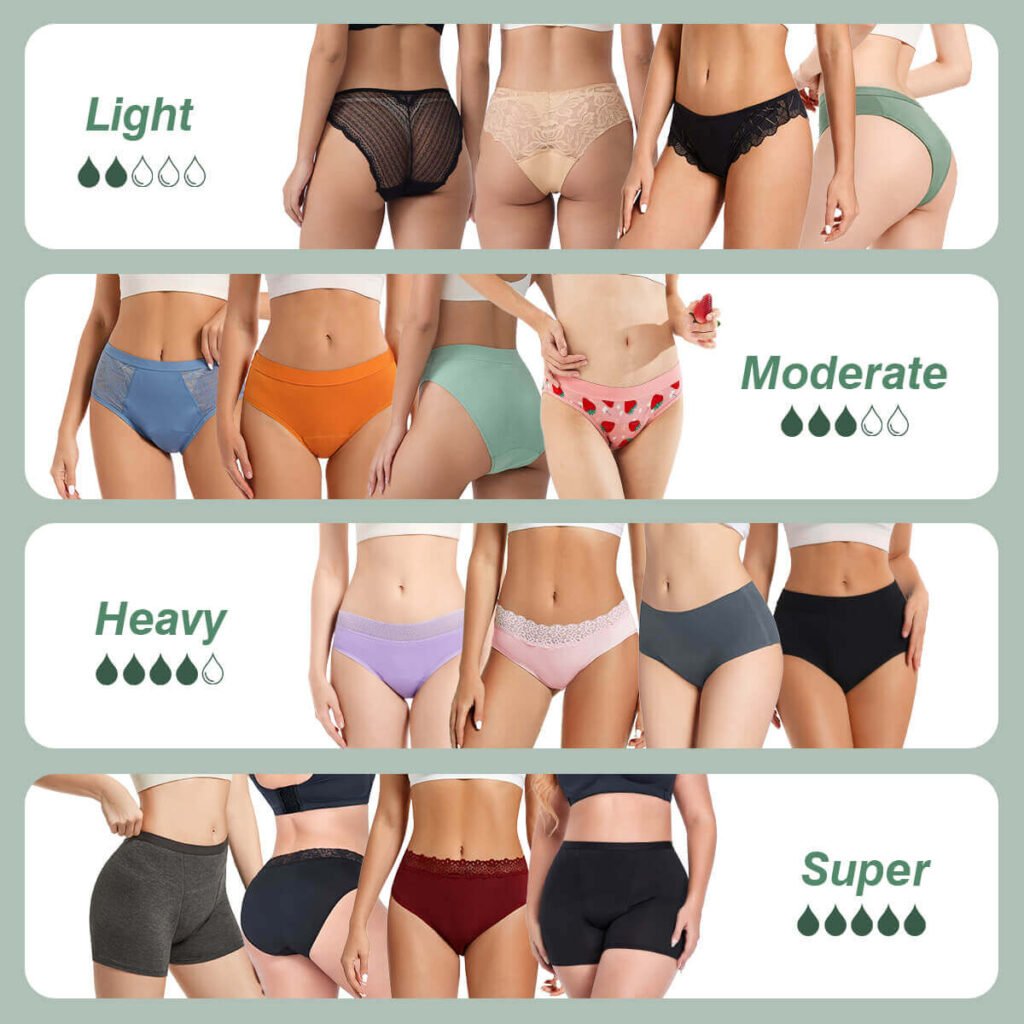
This is why brands should define the absorbency target before choosing the final fabric. Light-flow, daily-use, heavy flow period underwear, overnight, postpartum, and light bladder leakage products should not use the same construction.
Which Fabric Is Better for Different Product Lines?
For Teen Period Underwear
Cotton or organic cotton is usually a strong choice because it feels natural, familiar, and gentle. Teen customers and parents may also find cotton easier to trust.
For Premium Comfort Collections
Bamboo-derived fabric can be a better choice if the brand wants a soft, smooth, and premium hand feel. It is especially suitable for high-waist, bikini, lace, and comfort-focused daily styles.
For Sensitive-Skin Positioning
Organic cotton is usually easier to communicate for sensitive-skin products. However, brands should still verify dyes, finishing, waterproof layers, and certification documents.
For Heavy-Flow Period Underwear
Fabric choice is less important than absorbency structure. Both bamboo and cotton can be used, but the product should include stronger absorbent layers, extended gusset coverage, and reliable leakproof testing.
For Seamless or Invisible Styles
Nylon-spandex or bonded materials may be more suitable for invisible edges and no-show designs. Bamboo or cotton can still be used in the lining or gusset area, depending on the product structure.
For Sustainable Private Label Brands
Organic cotton may offer a clearer sustainability story when supported by documentation. Bamboo-derived fabric can also support a comfort-focused story, but claims should be carefully worded.
Best-For Guide for Private Label Brands
| Product Goal | Better Fabric Direction |
|---|---|
| Natural and familiar underwear feel | Cotton or organic cotton |
| Premium soft hand feel | Bamboo-derived fabric |
| Teen or first-period line | Cotton or organic cotton lining |
| Sensitive-skin positioning | Organic cotton with certification support |
| Daily comfort collection | Bamboo-derived fabric or cotton blend |
| Heavy-flow protection | Depends more on absorbent core and gusset structure |
| No-show or seamless styles | Nylon-spandex with suitable gusset lining |
| Eco-conscious brand story | Organic cotton with proper documentation |
Bamboo vs Cotton Fabric Selection Checklist
Before choosing bamboo or cotton for OEM production, brands should confirm:
- Target customer
- Price positioning
- Product style
- Absorbency level
- Skin-contact fabric requirement
- Waterproof layer material
- PFAS-free material options
- Certification requirements
- Washing durability
- Shrinkage and color fastness
- Fiber labeling rules in the target market
- MOQ, sample time, and production lead time
This checklist helps brands choose fabric based on product strategy, not only hand feel.
Manufacturing Factors Brands Should Not Ignore
1. Fabric Must Work With the Gusset Structure
A fabric may feel good as a swatch but perform poorly when combined with absorbent layers. Brands should test the full product, not just the material.
2. Washing Test Is Essential
Both bamboo-derived and cotton fabrics need washing tests. Brands should check shrinkage, pilling, softness, color fastness, waistband recovery, and leakproof performance after washing.
3. Bulk Production Stability Matters
Some fabrics may be available for samples but unstable for bulk production. Brands should confirm material supply before launching a full collection.
4. Claims Must Match Documents
If a brand wants to say organic cotton, PFAS-free, OEKO-TEX certified period underwear, antibacterial, odor-control, or bamboo-derived, the supplier should provide proper supporting information.
5. Absorbency Should Be Designed by Use Case
Light-flow, moderate-flow, heavy-flow, overnight, postpartum, and light bladder leakage products should not use the same absorbency structure.
How Lynmiss Factory Supports Bamboo and Cotton Period Underwear Development
Lynmiss Factory supports OEM and ODM development for period underwear, period swimwear, incontinence underwear, seamless bras, and shapewear. For bamboo and cotton period underwear, the factory can help brands compare fabric options, develop samples, customize absorbency levels, and prepare private label production.
Available customization directions can include:
- Bamboo-derived fabric options
- Cotton lining options
- Organic cotton material options when applicable
- PFAS-free waterproof layer options
- Absorbency customization
- Gusset shape customization
- Side leakproof construction
- Sewing, seamless, and bonded production options
- Logo, label, color, size, and packaging customization
- Leakproof testing
- Wash testing
- Needle detection
- Final inspection
For startups and private label brands, Lynmiss Factory can support sample development before bulk production. Custom OEM orders are normally around 1000 pieces, depending on style, material, color, and customization requirements.
Final Recommendation: Bamboo or Cotton?
Choose bamboo-derived fabric if your brand wants:
- A soft and smooth hand feel
- Premium comfort positioning
- Lightweight daily styles
- Fashionable silhouettes
- High-waist, bikini, cheeky, or lace designs
- A modern comfort-focused product story
Choose cotton or organic cotton if your brand wants:
- Natural comfort
- Sensitive-skin positioning
- Teen or first-period products
- Familiar underwear feel
- Organic or clean-material branding
- Easier consumer understanding
For many brands, the best solution is not choosing only one fabric. A strong product line can include both bamboo-derived and cotton options for different customers, styles, and absorbency levels.
Final Thoughts
Bamboo and cotton period underwear are both valuable directions for private label brands. Bamboo-derived fabrics are suitable for softness, smoothness, and premium comfort. Cotton and organic cotton are suitable for natural comfort, sensitive-skin positioning, and clean-material storytelling.
But the most important point is this: leakproof performance does not come from bamboo or cotton alone. It comes from the complete structure, including absorbent core, waterproof layer, gusset coverage, side leakproof design, washing durability, and quality control.
If you are developing a bamboo or cotton period underwear collection, Lynmiss Factory can help compare materials, create samples, customize absorbency, and build a private label product that fits your market.
FAQ
Is bamboo or cotton better for period underwear?
Bamboo-derived fabric is usually softer and smoother, while cotton feels more natural and familiar. The better choice depends on your brand positioning, target customer, and product function.
Is bamboo period underwear more absorbent than cotton?
Not necessarily. Absorbency depends mainly on the absorbent core, waterproof layer, and gusset design, not only on the body fabric.
Is organic cotton better for sensitive-skin period underwear?
Organic cotton can be a strong option for sensitive-skin positioning because it feels natural and gentle. Brands should still check certification support and waterproof layer safety.
Can bamboo period underwear be PFAS-free?
Yes, but PFAS-free performance depends on the waterproof layer and finishing materials. Brands should request PFAS-free material confirmation when developing leakproof underwear.
Which fabric is better for heavy-flow period underwear?
For heavy flow, the absorbent structure is more important than the body fabric. Both bamboo and cotton can be used if the gusset, absorbent core, and leakproof layer are properly engineered.
Can Lynmiss Factory make both bamboo and cotton period underwear?
Yes. Lynmiss Factory supports OEM and private label development with bamboo-derived fabrics, cotton, organic cotton options, customized absorbency levels, leakproof structures, labels, logos, colors, and packaging.
What should brands test before bulk production?
Brands should test absorbency, leakage protection, wash durability, shrinkage, color fastness, fit, waistband recovery, and overall comfort before confirming bulk production.