
For period underwear brands, a sample that looks good is not enough. The product must absorb quickly, resist side and back leakage, and continue performing after repeated washing.
Leakproof testing should therefore be completed before mass production. It allows the brand and manufacturer to identify problems while the fabric, gusset, fit, and construction can still be adjusted.
At Lynmiss Factory, the goal is not only to confirm how many milliliters an absorbent material can hold. It is to verify how the complete garment performs under realistic conditions.
What Does Leakproof Testing Evaluate?
Leakproof testing checks whether finished period underwear can absorb and retain liquid without allowing it to pass through the protective barrier or escape from the gusset edges.
A complete evaluation covers absorption speed, total retention, surface rewet, edge leakage, pressure performance, gusset coverage, fit, and wash durability.
These factors must work together. A high-capacity core can still fail if liquid moves too slowly, the gusset is too narrow, or the leakproof layer does not fully cover the risk area.
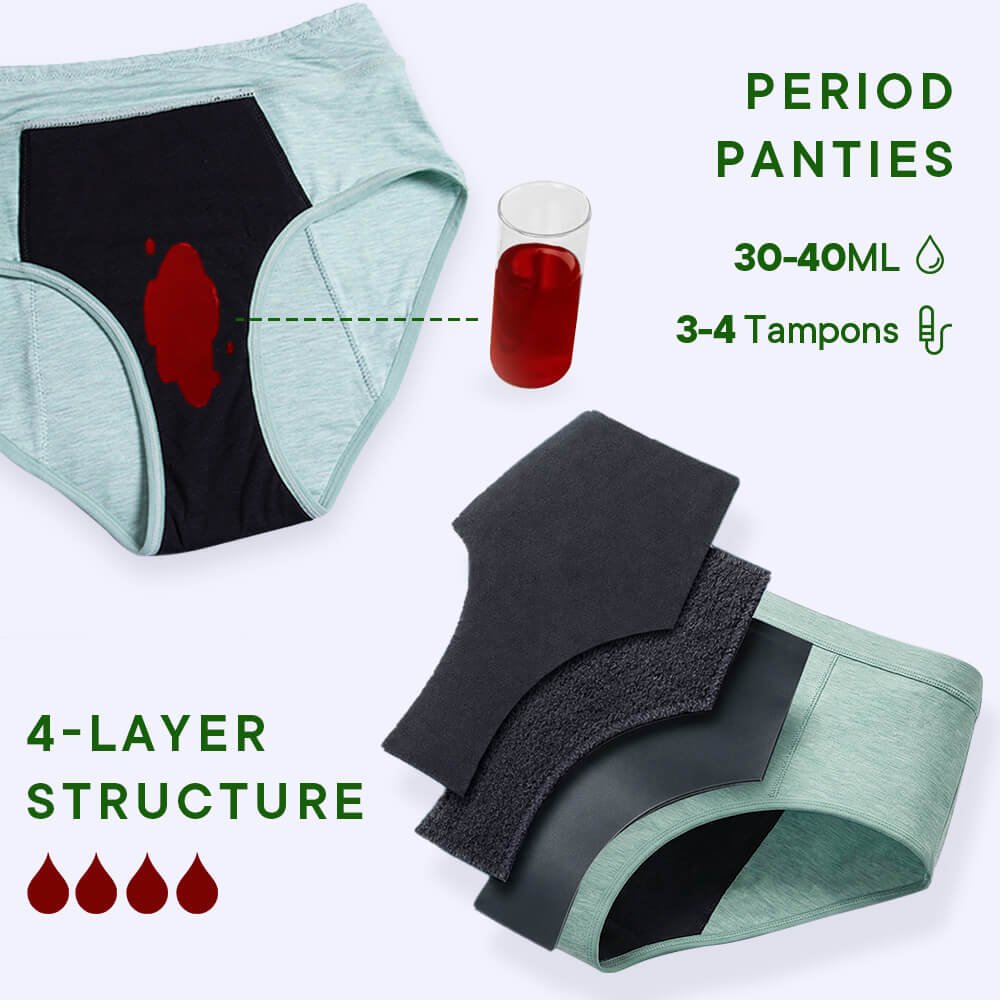
The role of each functional layer is explained in our guide to 4-layer leakproof period underwear technology.
Step 1: Define the Intended Use Case
Before testing begins, the brand must define what the product is designed to do.
A light-flow thong, moderate daytime brief, heavy-flow high-waist style, and overnight boyshort should not use the same performance target. Their capacity, protected area, wearing time, and customer expectations are different.
The testing brief should confirm the target user, flow level, expected wearing time, silhouette, size range, washing instructions, and planned marketing claim.
Without a clear use case, a sample may pass a laboratory test but still disappoint customers because the final claim exceeds the product’s actual design.
Step 2: Measure Absorption Speed
The first functional test measures how quickly liquid passes through the moisture-wicking top layer and enters the absorbent core.
This matters because leakage can begin before the product reaches its maximum capacity. If liquid remains on the surface, it may spread toward the edges or escape through the leg opening during movement.
A controlled amount of test liquid is applied to the target area. The team observes how quickly it leaves the surface, whether it pools, how evenly it spreads, and whether the skin-contact layer remains wet.
Heavy-flow products should also be tested with repeated applications rather than one slow pour.
Step 3: Verify Capacity and Retention
After absorption speed is checked, the sample is tested for total capacity.
Measured liquid is added gradually until leakage, overflow, or unacceptable surface wetness appears. The result helps determine whether the style is suitable for light, moderate, heavy, or overnight positioning.
However, the highest laboratory number should not automatically become the customer-facing claim. A responsible claim should include a performance margin and consider movement, pressure, fit, and washing.
Retention is equally important. The core must hold the absorbed liquid when the wearer sits, bends, exercises, or sleeps.
Step 4: Apply Pressure and Check Rewet
After the sample absorbs a controlled volume, pressure is applied to simulate sitting or close body contact. The tester checks whether moisture returns to the top layer, escapes through seams, moves toward the leg openings, or passes through the waterproof barrier.
A product may have good total capacity but poor rewet performance. This can make the wearer feel damp and increase leakage risk during longer use.
Step 5: Check Gusset Coverage and Edge Leakage
Many leakage problems are caused by coverage rather than insufficient capacity.
The center of the gusset may absorb correctly while liquid escapes because the protected area is too narrow, too short, or incorrectly positioned. Overnight products require particular attention because liquid can travel toward the back during sleep.
Testing should review gusset width, front and back extension, waterproof-layer placement, seam control, leg-opening fit, and alignment across sizes.
The relationship between capacity, fit, gusset design, and product claims is covered in how brands can reduce period underwear leakage complaints before production.
Step 6: Repeat Testing After Washing
Period underwear is reusable, so testing only a new sample is not enough.
Repeated washing can affect fabric shrinkage, elastic recovery, absorption speed, lamination stability, seam strength, and gusset shape. A product that passes before washing may later develop edge lifting, barrier damage, or slower liquid transfer.
Post-wash testing should check absorbency retention, waterproof-layer stability, bonding or seam durability, elastic recovery, fabric deformation, and leakage performance.
If the manufacturer changes the fabric, membrane, supplier, or bonding process, testing may need to be repeated.
Step 7: Lock the Approved Sample Before Production
Once the pre-production sample passes testing, it should become the reference standard for mass production.
The approved materials, pattern, gusset dimensions, layer order, construction method, and performance target should be recorded. In-line inspections can then verify that bulk garments follow the same standard.
Finished units should also be sampled during production. This helps identify incorrect layer placement, uneven cutting, damaged waterproof barriers, or material variation before packing.
Leakproof testing should form part of the wider quality control process for period underwear manufacturing, which also covers raw materials, cutting, gusset assembly, wash durability, and final inspection.
Why Samples Commonly Fail
A failed test does not always mean the absorbent core must be thicker.
Common causes include slow moisture transfer, narrow gusset coverage, misaligned waterproof layers, poor leg-opening fit, seam damage, weak edge sealing, delamination, or an unrealistic marketing claim.
The correct solution is to identify the actual failure point. Adding more absorbent material without correcting fit or coverage may increase bulk while leaving the original problem unchanged.
How Lynmiss Factory Supports Testing
Lynmiss Factory supports OEM and ODM development for period underwear, period swimwear, and reusable incontinence products.
Depending on the product brief, development can include customized absorbency, four-layer structures, PFAS-free waterproof barriers, side-leak protection, sewn or bonded construction, pressure checks, wash-cycle testing, and gusset review before bulk production.
The test plan should be agreed before sample approval so the final claim reflects the complete garment rather than an isolated fabric result.
Final Takeaway
Leakproof testing before mass production helps brands reduce returns, negative reviews, and expensive corrections after launch.
The most reliable process evaluates absorption speed, total retention, rewet, edge leakage, fit, and wash durability as one connected system. When the approved sample is locked and the same standard is maintained during bulk production, brands gain better control over performance and customer expectations.
For private-label development, share your target user, absorbency level, garment style, expected wearing time, and planned claim with Lynmiss Factory before sampling begins.