Odor control is an important requirement for period underwear, reusable incontinence underwear, and other absorbent intimate apparel. However, odor is not controlled simply by adding fragrance or increasing absorbency.
Odor can develop when moisture, warmth, sweat, menstrual fluid, or urine remain in contact with microorganisms on the textile. As these microorganisms break down organic compounds, volatile odor molecules may be produced.
Silver ion technology helps manage this problem by limiting microbial activity inside selected fabric or absorbent layers. For brands, the key is understanding how it works, where it should be used, and how performance should be verified.
What Is Silver Ion Technology?
Silver ion technology uses positively charged silver ions, written as Ag+, as an antimicrobial component in textile materials.
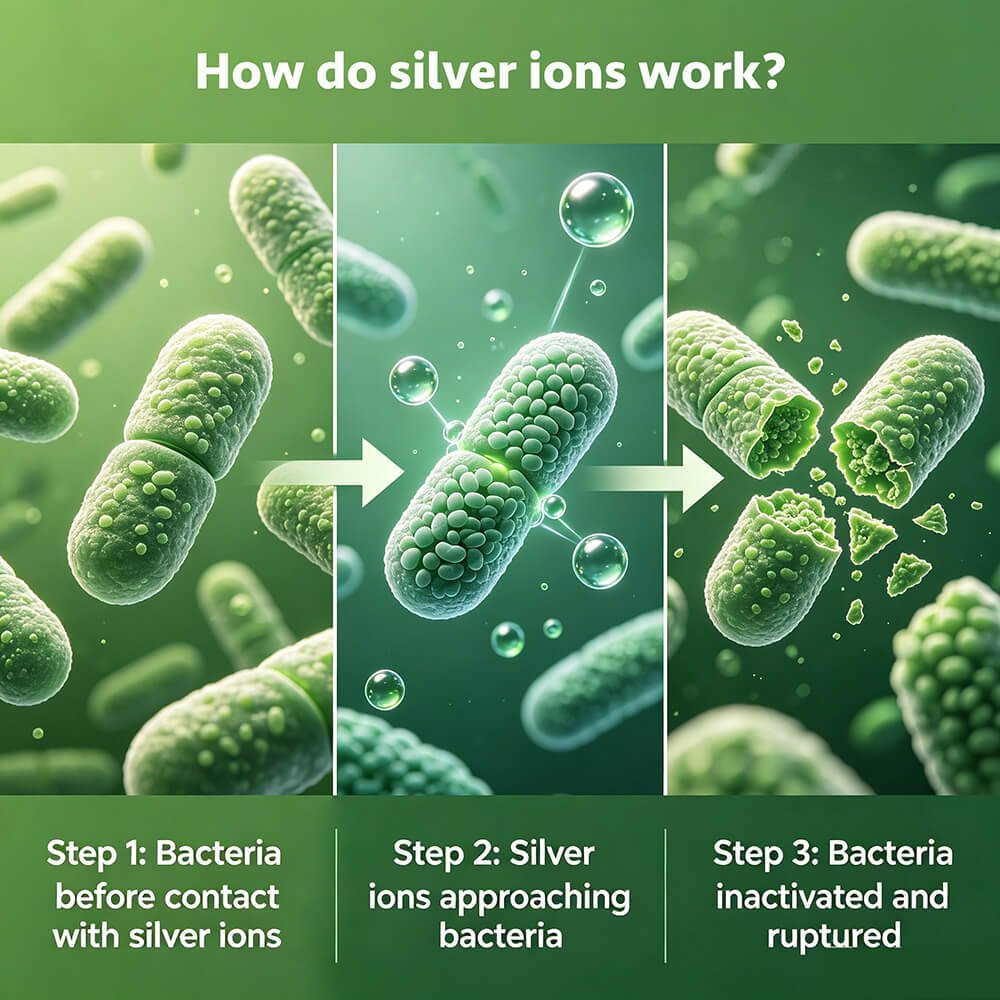
When moisture reaches the treated or engineered fiber, silver ions become available at the textile surface. They can interact with microbial cell membranes, proteins, and enzyme systems, making it more difficult for odor-causing microorganisms to remain active. Studies have found that silver ions can affect bacterial membranes, proteins, and DNA-related activity, although the exact effect depends on the silver form, concentration, and microorganism.
Silver does not absorb odor like activated carbon or cover it with perfume. Instead, it helps reduce one of the biological processes that allows odor to build up in damp textiles.
Depending on the product design, silver ion technology may be incorporated into the skin-contact layer, absorbent core, lining yarn, or another functional material.
Why Odor Develops in Absorbent Underwear
Period underwear holds fluid close to the body for several hours. Moisture, warmth, menstrual fluid, sweat, and limited airflow can create favorable conditions for odor-causing microorganisms.
Incontinence products face a different challenge. When urine remains in a textile, some bacteria can break down urea and contribute to ammonia-related odor. Urine may also enter the garment faster and in a larger volume, so the structure must manage both liquid and odor.
This is why menstrual and incontinence products should not automatically use the same functional core. The different fluid behaviors and material requirements are explained in our guide to period underwear vs incontinence underwear engineering. Lynmiss Factory’s current engineering approach uses different core structures for menstrual and urinary fluid management, including silver-ion filament yarns in selected incontinence applications.
How Silver Ions Help Control Odor
Silver ions support odor management in three main ways.
First, they help limit microbial growth. Odor-causing microorganisms need moisture, nutrients, and suitable temperatures to multiply. Silver ions can interfere with important microbial processes, helping reduce growth on the treated textile.
Second, they help reduce odor formation at the source. Silver ion technology is not a scented deodorizer. Its purpose is to limit odor before it becomes noticeable, rather than masking an existing smell.
Third, silver ions can support freshness during longer wear. Heavy-flow, overnight, postpartum, and incontinence products may hold more liquid or remain damp for longer.
Silver ions cannot compensate for slow absorption, excessive surface wetness, poor breathability, or an undersized gusset. Odor control must be part of the complete product system.
Where Should Silver Ion Technology Be Used?
A silver-ion yarn or treatment may be placed in the skin-contact layer to support surface freshness. It may also be incorporated into the absorbent core, where retained fluid creates a greater odor risk.
Lynmiss Factory uses silver-ion solutions in selected period and incontinence developments. For higher-durability applications, silver-ion components can be incorporated into filament yarns or functional core materials instead of relying only on a temporary surface spray.
Before approving the material, brands should confirm which layer contains the silver-ion component, whether it is built into the fiber or applied as a finish, expected wash durability, and the test method supporting the claim.
Silver Ions Must Work With the Leakproof Structure
Odor control is only one part of functional performance.
The moisture-wicking layer must move liquid away from the skin. The absorbent core must capture and distribute it. The waterproof membrane must prevent leakage, while the body fabric and gusset design support comfort and airflow.
This relationship is explained in our guide to 4-layer leakproof period underwear technology.
If liquid remains pooled on the surface, the wearer may still experience dampness and odor even when an antimicrobial material is present. Brands should evaluate silver-ion technology together with absorption speed, rewet, capacity, breathability, and drying time.
Built-In Silver Ions vs Surface Finishes
A surface finish is applied after fabric production. It can be easier to add, but durability depends on the chemistry, application process, and washing conditions.
A built-in solution incorporates the silver component into the fiber, yarn, or material structure during manufacturing. This may provide better wash durability because the technology is not limited to the outer surface.
However, “built-in” should not automatically be marketed as permanent. Brands should request wash-test data and avoid claims beyond the verified result. Research on silver-treated textiles has shown that antimicrobial performance after laundering can vary significantly according to the silver concentration and application method.
The best option depends on product lifespan, fabric type, target cost, wash requirements, and destination market.
How Brands Should Test Odor-Control Performance
A supplier statement alone is not enough. Antibacterial performance and durability should be verified using suitable textile test methods.
ISO 20743 provides quantitative methods for evaluating antibacterial activity in textile products, including fabrics, yarns, and nonwovens. It applies to technologies introduced through built-in materials, after-treatment, or grafting methods. Testing should use the actual production material and be repeated after a defined number of wash cycles.
Brands should also evaluate absorption and drying performance, handfeel, breathability, color change, skin-contact documentation, membrane compatibility, and odor performance during controlled wear trials.
These checks should be included in the broader quality control process for period underwear manufacturing.
Avoid Overstating Silver Ion Claims
Silver-ion technology should be marketed accurately.
Suitable wording may include “odor control,” “helps inhibit odor-causing bacteria,” or “supports longer-lasting freshness,” provided the wording is supported by testing and permitted in the target market.
Brands should avoid implying that the garment prevents infection, treats a medical condition, or eliminates every microorganism unless they have the required evidence and authorization. In the United States, antimicrobial-treated products may face restrictions on public-health claims, while odor, staining, or textile-protection claims must remain consistent with the registered antimicrobial technology and supporting evidence.
Silver-ion underwear must also be washed according to its care instructions. Antimicrobial technology supports textile freshness, but it does not replace normal cleaning and hygiene.
How Lynmiss Factory Supports Development
Lynmiss Factory supports OEM and ODM development for period underwear, reusable incontinence underwear, postpartum products, and other absorbent apparel.
Depending on the brief, development can include silver-ion yarns or functional materials, bamboo or organic cotton lining options, customized absorbency, PFAS-free waterproof barriers, four-layer structures, side-leak protection, wash testing, and private-label packaging.
During sampling, brands can compare material placement, surface dryness, odor control, absorbency, and wash durability before approving bulk production.
Final Takeaway
Silver ion technology controls odor by helping limit microbial activity in moisture-prone textile areas. It should not be treated as a substitute for absorbency, breathability, fit, or washing.
For brands developing period or incontinence underwear, the silver-ion specification should be defined during material selection and confirmed through testing before mass production.