Sustainable packaging is becoming an important sourcing decision for period underwear brands.
But choosing packaging is not as simple as replacing plastic with paper.
A package must protect the garment, survive international shipping, support branding, fit the target retail channel, and meet applicable material and documentation requirements.
For private label brands, the best packaging is usually not the material with the strongest environmental marketing claim. It is the option that balances protection, material use, recyclability, logistics, customization, cost, and compliance.
What Packaging Options Are Available for Period Underwear?
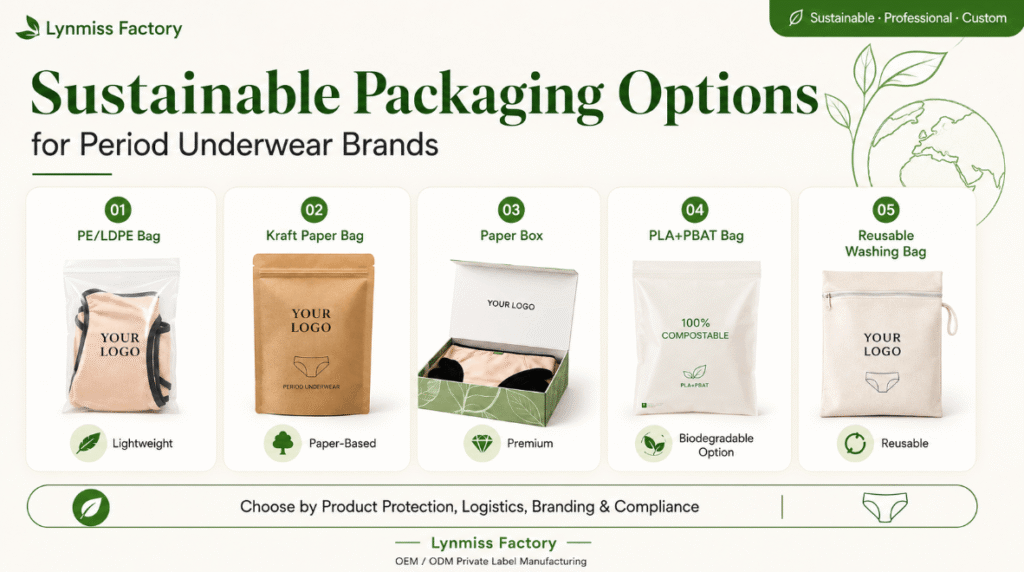
Common private label packaging options include:
| Packaging Type | Main Advantage | Best Use |
|---|---|---|
| PE Bag | Lightweight, moisture protection | E-commerce and inner packing |
| LDPE / Self-Sealing Bag | Reusable closure and clean presentation | Retail and online orders |
| Kraft Paper Bag | Natural appearance and paper-based positioning | Eco-focused collections |
| Paper Box | Strong branding and premium presentation | Retail and gift packaging |
| Corrugated Carton | Transport protection | Bulk shipping |
| PLA + PBAT Bag | Biodegradable-material positioning | Selected sustainability programs |
| Washing Bag / Fabric Pouch | Reusable and premium | Higher-value collections |
Brands do not necessarily need one packaging format for every market. An e-commerce collection, retail program, subscription box, and wholesale order may require different solutions.
1. PE and LDPE Bags: Lightweight and Practical
Plastic bags are often criticized in sustainability discussions, but they still provide practical advantages.
PE and LDPE packaging can offer:
- Low weight
- Moisture protection
- Good garment visibility
- Low transport volume
- Easy barcode or label application
- Lower packaging cost
Because they use relatively little material, lightweight bags may also reduce shipping weight compared with heavier rigid packaging.
The key question is not simply whether plastic is used, but how much material is necessary and whether unnecessary packaging layers can be eliminated.
Brands can also evaluate recycled-content options, thinner films, simpler printing, or reusable zipper structures depending on the target market.
2. Kraft Paper Packaging for a Natural Brand Image
Kraft paper is popular with brands that want a simple, natural visual identity.
It works well for period underwear because it can support:
- Minimalist branding
- Printed logos
- Paper labels
- Simple product information
- Reduced use of plastic
- Easy integration with paper-based retail systems
However, kraft paper has limitations.
It does not offer the same moisture barrier as plastic, and it may be less suitable when garments are exposed to humidity during long-distance shipping.
For this reason, brands should consider the complete logistics chain before removing protective inner packaging.
A sustainable design that causes moisture damage, staining, or higher product rejection is not necessarily a better environmental solution.
3. Paper Boxes for Premium Private Label Collections
Paper boxes provide more space for branding and product education.
They are particularly suitable for:
- Premium period underwear
- Retail shelves
- Starter kits
- First-period kits
- Multi-pack products
- Gift sets
- Subscription programs
A box can communicate absorbency level, washing instructions, size, material information, and product benefits more clearly than a simple bag.
However, brands should avoid oversized boxes.
A large box with significant empty space increases material consumption, shipping volume, and storage requirements.
A better approach is to design the smallest box that protects the product and provides enough communication space.
Brands developing a full private-label program can integrate packaging decisions into the broader custom period underwear manufacturing process instead of choosing packaging only after the garment has been finalized.
4. PLA + PBAT and Biodegradable Packaging
PLA and PBAT blends are sometimes used for biodegradable or compostable packaging applications.
They can support brands looking for alternatives to conventional fossil-based plastic packaging.
However, terms such as biodegradable and compostable should be used carefully.
Actual end-of-life performance depends on:
- Material composition
- Thickness
- Certification
- Disposal environment
- Industrial versus home composting conditions
- Local waste-management infrastructure
Brands should request supporting documentation before making environmental claims.
A material described by a supplier as “eco-friendly” should not automatically be marketed as biodegradable, recyclable, or compostable without evidence.
This same principle applies to functional apparel claims. Our guide to what PFAS-free really means in period underwear explains why marketing language should always match the actual test scope and material documentation.
5. Reusable Washing Bags and Fabric Pouches
Reusable fabric packaging can create a more premium customer experience.
A washing bag or drawstring pouch can serve two functions:
Packaging at purchase and a reusable accessory after purchase.
This can be particularly useful for:
- Travel collections
- Period swimwear
- Teen starter kits
- Multi-piece sets
- Premium private label programs
However, adding a reusable pouch also adds material, labor, weight, and cost.
Brands should consider whether customers are likely to reuse it. Adding an unnecessary fabric accessory only to make the package appear sustainable may create more material consumption rather than less.
6. Packaging Should Be Designed Around the Sales Channel
The best sustainable packaging depends partly on how the product reaches the customer.
E-Commerce
Lightweight packaging is usually more efficient. The outer shipping carton already provides structural protection, so heavy retail boxes may be unnecessary.
Retail Stores
Packaging may need stronger visual communication, barcodes, hanging structures, or shelf-ready formats.
Wholesale
Products may require individual inner packaging plus efficient carton packing.
Subscription or Gift Sets
A branded box may be valuable because presentation is part of the customer experience.
Before approving packaging, brands should therefore define both the product and its distribution model.
7. Reduce Packaging Before Changing Materials
One of the most effective sustainability strategies is often the simplest:
Use less packaging.
Brands can review whether they really need:
- An individual plastic bag
- An additional paper sleeve
- A printed box
- Tissue paper
- A washing bag
- A hangtag
- Multiple stickers
Some components may be necessary for retail, logistics, hygiene, or customer communication. Others may be removable.
A packaging review should ask:
Can we achieve the same protection and branding with fewer materials?
This approach often reduces packaging cost at the same time.
8. Documentation and Traceability Matter
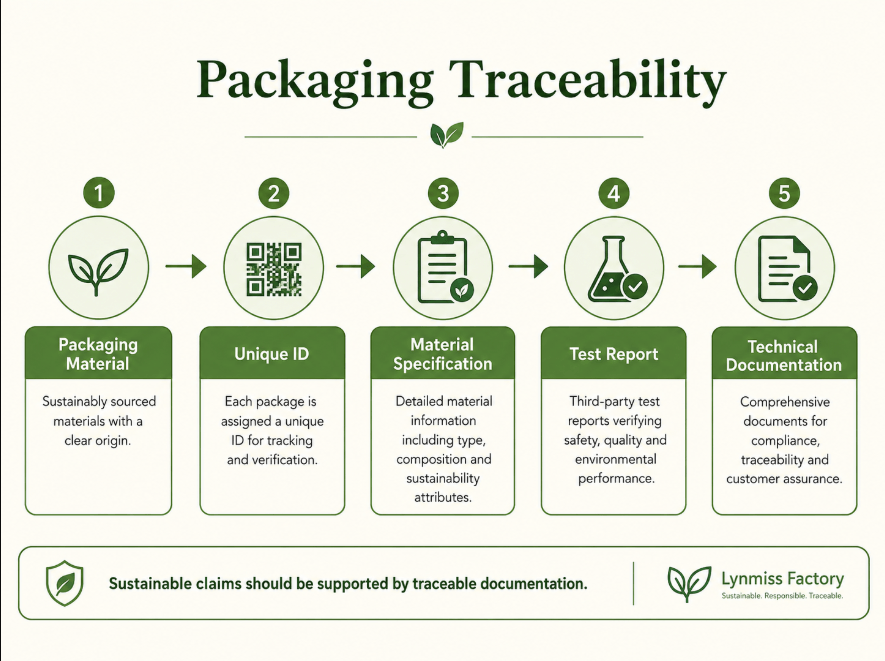
Sustainable packaging decisions increasingly require supporting documentation.
A sourcing team may need to know:
- Material composition
- Supplier information
- Packaging specification
- Test reports
- Restricted-substance information
- Recycling or compostability evidence
- Packaging identification
- Relevant declarations
This is particularly important for brands selling into regulated markets.
Packaging materials should therefore be connected with the actual specification used during production rather than stored as unrelated certificates.
The same traceability principle is used throughout garment production. Our guide to quality control in period underwear manufacturing explains why approved materials and specifications should remain consistent from sampling through bulk production.
What Should Brands Ask Before Choosing Packaging?
Before approving a private label packaging option, ask:
- What material is being used?
- How much packaging is actually necessary?
- Does it protect the garment during transport?
- Is the material suitable for the destination market?
- What supporting documentation is available?
- Can logos, barcodes, labels, and care information be customized?
- What is the MOQ?
- Will changing the packaging increase shipping volume?
- Can the material claim be verified?
- Can the same specification be maintained during bulk production?
These questions help brands avoid choosing packaging based only on appearance.
How Lynmiss Factory Supports Custom Packaging
Lynmiss Factory supports OEM and ODM packaging development alongside period underwear, reusable incontinence underwear, period swimwear, and other functional intimate apparel.
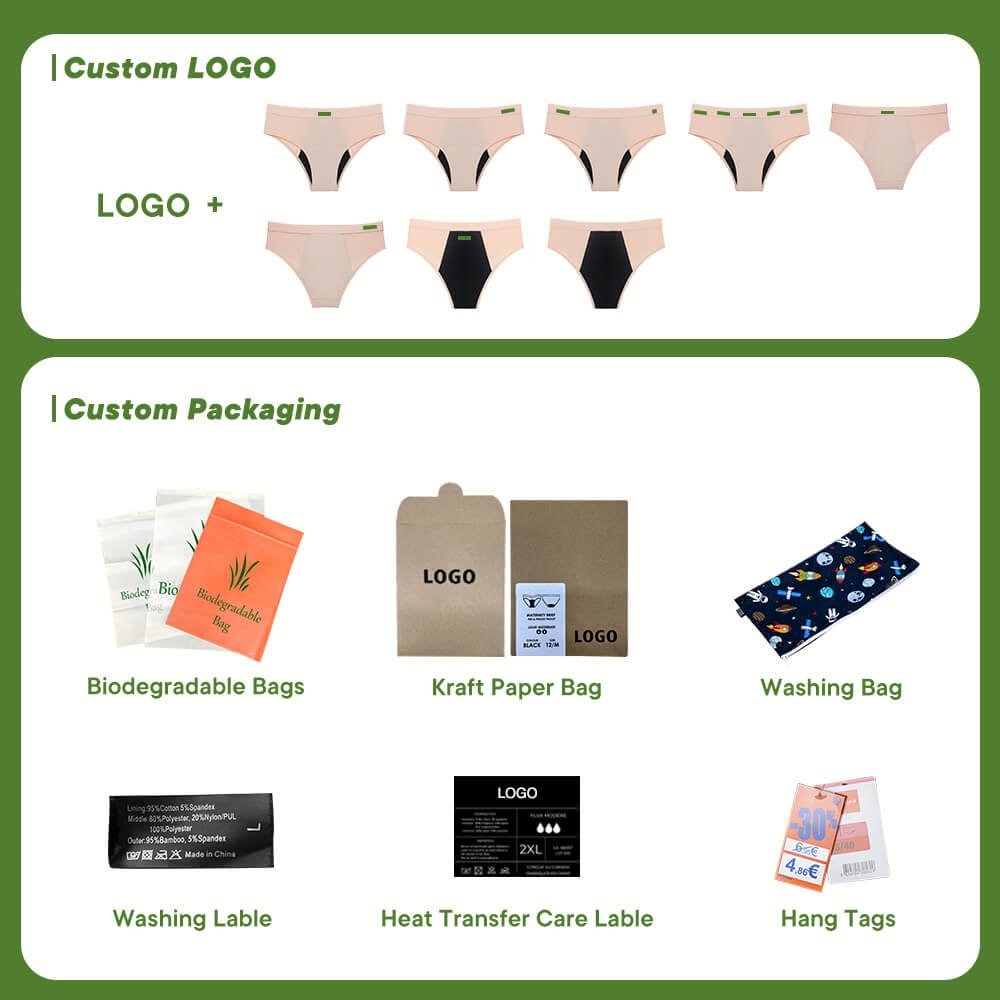
Depending on the project, packaging options can include:
- PE and LDPE bags
- Kraft paper packaging
- Paper boxes
- Corrugated cartons
- PLA + PBAT materials
- Custom washing bags
- Washing labels and care labels
- Hangtags
- Custom logos and printing
- Packaging material documentation
Our team can help brands review packaging based on product type, market positioning, order quantity, logistics requirements, and available material documentation.
FAQ
What is the most sustainable packaging for period underwear?
There is no single best option. The right solution depends on material use, recyclability, transport weight, product protection, local waste systems, and whether the packaging can be reduced or reused.
Is paper packaging always better than plastic?
Not necessarily. Paper may use more material and occupy more shipping space, while lightweight plastic can offer strong moisture protection. Brands should compare the complete packaging system rather than judging one material in isolation.
Can period underwear packaging be customized?
Yes. Private label options can include bags, boxes, kraft packaging, labels, hangtags, washing bags, logos, colors, and printed information.
Should sustainable packaging claims be tested?
Claims such as biodegradable, compostable, recycled content, or specific chemical restrictions should be supported by appropriate documentation or testing.
Final Takeaway
Sustainable packaging is not about choosing the material that looks the most environmentally friendly.
It is about designing a packaging system that uses materials efficiently, protects the product, supports the brand, works in the supply chain, and can be supported by appropriate documentation.
For private label period underwear brands, the best starting point is simple:
Reduce what is unnecessary, verify what is claimed, and choose materials based on the real product and market.
Explore Lynmiss Factory OEM/ODM period underwear and custom packaging capabilities at www.misiundies.com.